Jun 26, 2026News & Insights
The Humanoid Robot Industry in 2025: Growth, Challenges, and the Path to Mass Adoption
This article delves into the current state of the industry, its core controversies, and the key factors shaping its future trajectory.
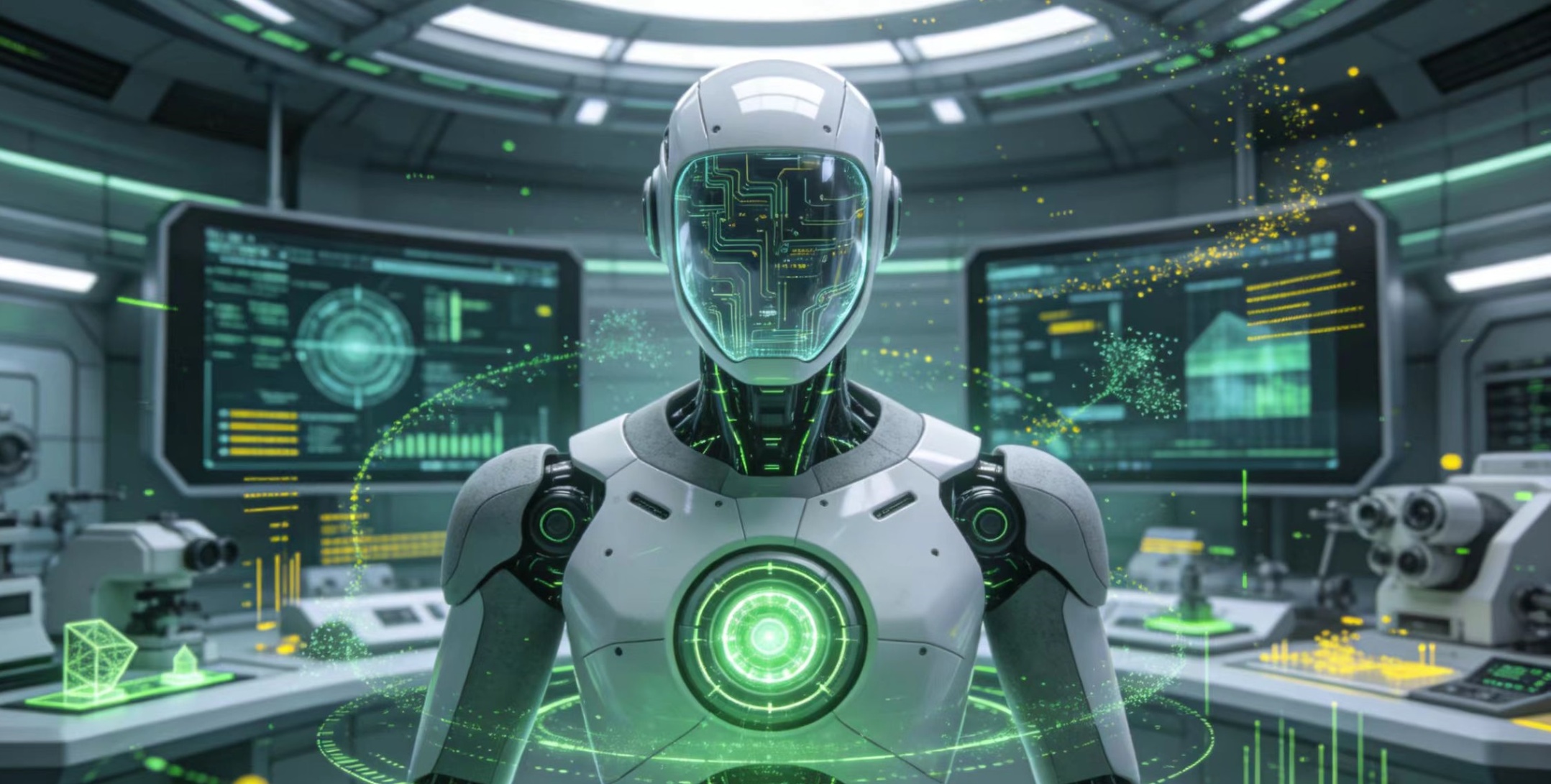
The global humanoid robot industry has entered a critical phase of development in 2025, marked by remarkable growth in shipments yet persistent challenges that hinder widespread adoption. As technological breakthroughs continue to push the boundaries of what these machines can do, the sector stands at a crossroads—between remaining a niche market for developers and research institutions or evolving into a transformative force in everyday life. This article delves into the current state of the industry, its core controversies, and the key factors shaping its future trajectory.
In 2025, the humanoid robot market will have witnessed a significant surge in shipments, driven by advancements in hardware design, artificial intelligence (AI), and increased investment from both established tech giants and startups. Data shows that the top three players—Zhiyuan, Unitree, and UBTECH—dominate the landscape, collectively shipping over 10,000 units, a substantial jump from 2024 levels. These leading companies have leveraged their technological expertise and supply chain advantages to scale production, capturing a disproportionate share of the market. However, this growth story is tempered by a stark reality: among the more than 140 domestic whole-machine manufacturers, the vast majority have failed to deliver meaningful production capacity. Many firms remain stuck in the prototype stage, struggling to translate technical concepts into commercially viable products. This concentration of market power highlights the industry’s immaturity, as only a handful of enterprises have overcome the hurdles of mass production, quality control, and cost optimization.
Despite the impressive growth in shipments, the humanoid robot industry grapples with three core challenges that have prevented it from moving beyond early-stage adoption. The first and most pressing issue is the lack of diverse application scenarios. Currently, most humanoid robots are confined to entertainment and demonstration purposes, such as dancing, performing tricks, or participating in tech expos. While these use cases showcase the robots’ mobility and dexterity, they offer little practical value for everyday consumers. The mass market remains untapped because of the high barrier to secondary development—users often lack the technical skills to customize robots for their specific needs, leading to devices that quickly become “dust collectors.” As a result, the core customer base remains limited to developers, academic institutions, and a small group of tech enthusiasts willing to invest time and resources into programming and modification. For humanoid robots to gain mainstream acceptance, they must transcend their role as novelty items and prove useful in real-world settings, from household chores and elder care to industrial automation and healthcare.
The second major challenge is the difficulty of achieving “out-of-the-box usability. Many consumers and businesses are deterred by the complex setup and operation processes required for humanoid robots. Hardware instability remains a persistent issue: components such as joints, sensors, and batteries often fail to perform reliably in real-world conditions, leading to frequent breakdowns and maintenance needs. Additionally, the underlying AI models powering these robots are still in need of refinement. Current systems struggle with natural language processing, environmental adaptation, and decision-making in unstructured environments, making it hard for robots to respond intuitively to user commands. This lack of user-friendliness has limited adoption in sectors where simplicity and reliability are paramount, such as healthcare and retail. To address this, manufacturers must prioritize hardware durability and invest in more advanced AI algorithms that can handle the complexity of real-world interactions.
The third critical gap lies between mass production goals and practical utility. Elon Musk’s ambitious target of producing 100,000 humanoid robots annually remains far from realization, a testament to the industry’s struggle to scale efficiently. Today, most production is project-based, with manufacturers catering to specific orders from research institutions or large enterprises rather than meeting broad consumer demand. This model reflects the uncertainty surrounding real market needs—while there is significant hype around humanoid robots, their actual value proposition in many sectors is still unproven. The core bottleneck here is insufficient intelligence: current robots cannot adapt to dynamic, complex environments, limiting their usefulness in tasks that require flexibility and problem-solving. For example, a humanoid robot designed for warehouse work may struggle to handle unexpected obstacles or variations in product placement, reducing its efficiency compared to specialized automation solutions. Until robots can match or exceed human capabilities in terms of adaptability and decision-making, mass production will remain unfeasible, as there is little incentive for businesses to invest in a technology that does not deliver clear performance benefits.
Despite these challenges, there are promising signs that the humanoid robot industry is poised for growth. Automakers, in particular, are emerging as key players, bringing their expertise in supply chain management, manufacturing scale, and intelligent systems to the sector. Companies like Tesla, Toyota, and Volkswagen have invested heavily in humanoid robot development, recognizing the synergy between automotive technology—such as battery systems, motor controls, and AI-driven driver assistance—and robot design. Their entry into the market is expected to drive down costs through economies of scale and accelerate technological innovation, addressing two of the industry’s biggest pain points. Additionally, advancements in AI, particularly in large language models (LLMs) and computer vision, are enhancing robots’ ability to understand and interact with their surroundings. As these technologies mature, robots will become more capable of handling complex tasks, expanding their application scope beyond entertainment and research.
Another potential growth driver is the increasing focus on specialized use cases rather than one-size-fits-all solutions. Instead of developing general-purpose humanoid robots, manufacturers are increasingly targeting specific industries with tailored products. For example, in healthcare, robots are being designed to assist with patient care, such as lifting and transferring elderly or disabled individuals, administering medication, and monitoring vital signs. In manufacturing, robots are being optimized for assembly line tasks that require precision and repetitive motion, reducing the risk of human error and improving efficiency. By focusing on these niche applications, manufacturers can address specific pain points and demonstrate clear value, building trust and driving adoption in key sectors. Over time, as technology advances and costs decrease, these specialized robots can be adapted for broader use, paving the way for mass adoption.
To realize its full potential, the humanoid robot industry must also address regulatory and ethical considerations. As robots become more integrated into society, questions about safety, privacy, and job displacement will become increasingly prominent. Regulators will need to establish clear standards for robot design and operation to ensure public safety, while manufacturers must prioritize data privacy to protect users’ personal information. Additionally, the industry must engage in a dialogue with policymakers, labor organizations, and the public to address concerns about job loss, ensuring that the transition to a robot-enabled economy is inclusive and equitable. By proactively addressing these issues, the industry can build public trust and create a supportive regulatory environment that fosters innovation.
In conclusion, the humanoid robot industry in 2025 is a story of contradictions—significant growth in shipments alongside persistent challenges, technological promise paired with practical limitations. While the sector has made impressive strides in recent years, it remains in the early stages of development, with most robots confined to niche use cases. To achieve mass adoption, manufacturers must overcome three core hurdles: expanding application scenarios beyond entertainment, improving out-of-the-box usability, and bridging the gap between mass production and practical utility. The entry of automakers and advancements in AI offer hope for addressing these challenges, while a focus on specialized use cases and proactive engagement with regulatory and ethical issues will be critical for building a sustainable future. As the industry continues to evolve, humanoid robots have the potential to transform our lives— but only if they can move beyond being “toys for tech enthusiasts” and prove their value as reliable, useful tools in the real world. The path to mass adoption will be long and fraught with obstacles, but for those willing to invest in innovation and address the industry’s core issues, the rewards could be transformative.